
A Celebration of the History of Computer Games and Consoles
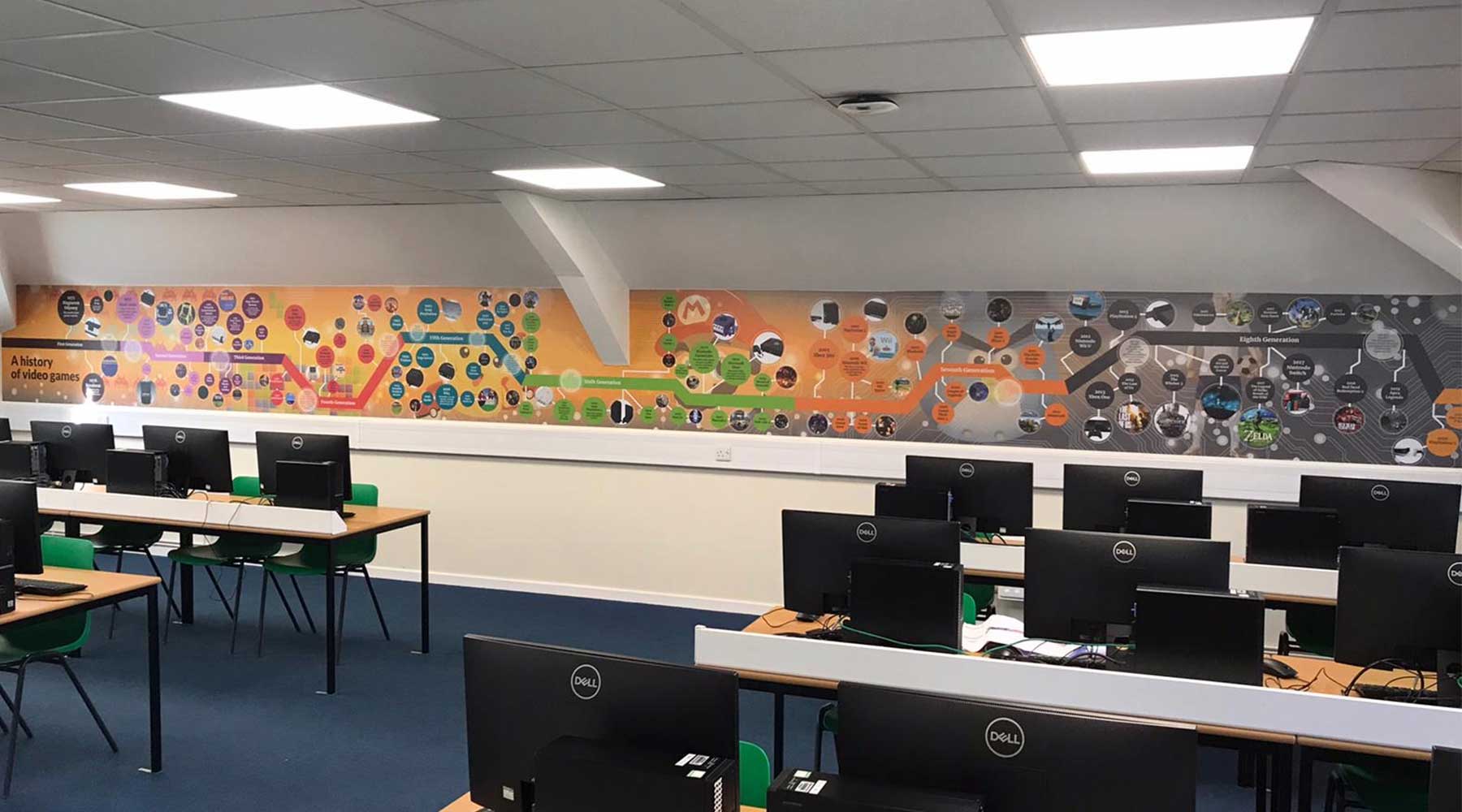
When Aldenham School approached Design for Education, the goal was clear: create a more engaging and inspiring learning environment for students within the Computer Science department.
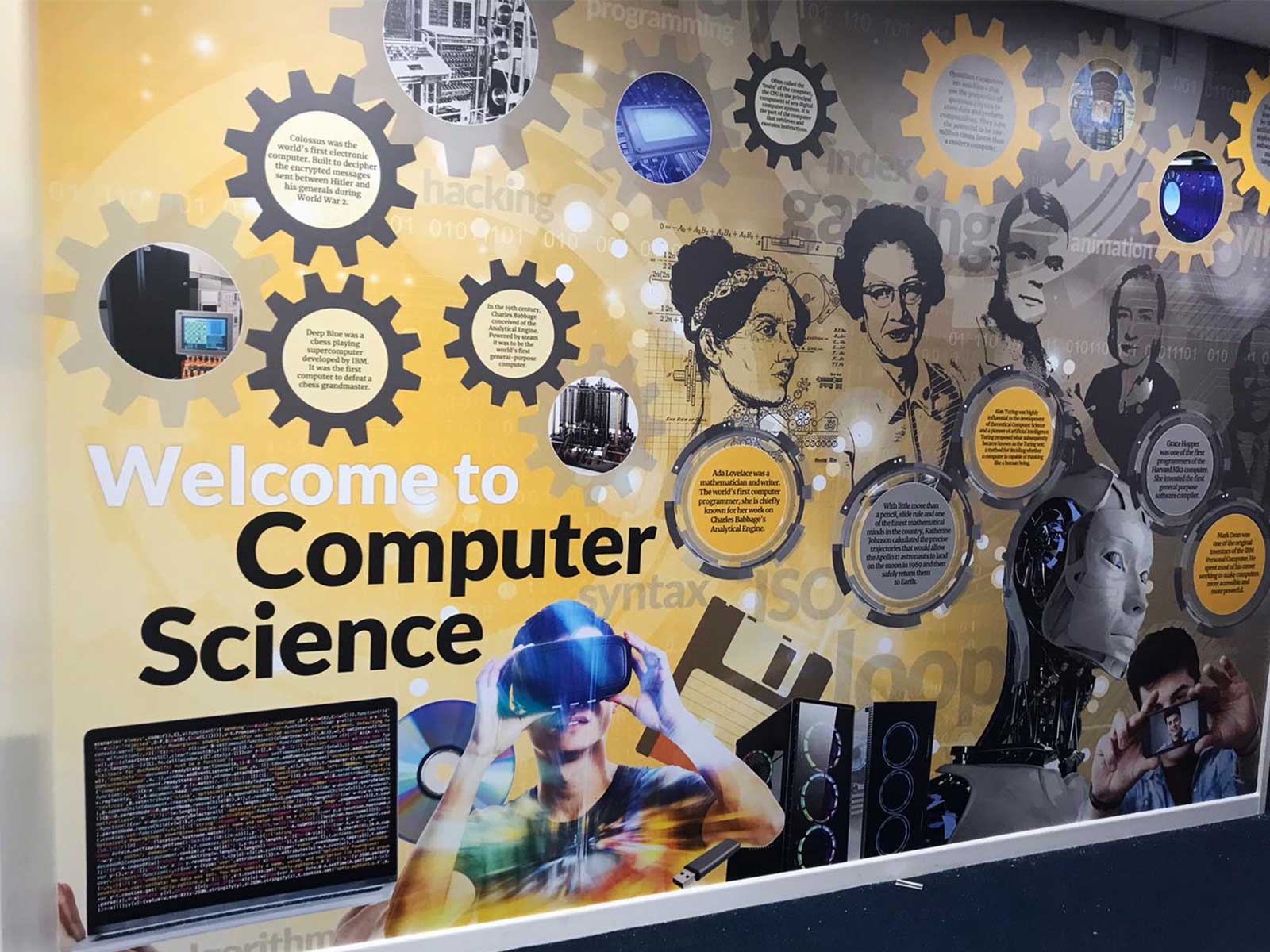
The project began with a welcome wall display designed to establish a strong identity for the department and create an immediate sense of excitement as students entered the space. From there, the concept developed into a larger educational installation centred around a history timeline of computer games and iconic games consoles.
The department wanted students to see a direct connection between the technology they use and enjoy at home and the topics they study in the classroom. By showcasing the evolution of gaming technology, from early arcade systems through to modern consoles and game development, the displays were designed to spark curiosity, encourage discussion and inspire future careers in technology and software development.
As a secondary school, Aldenham School also wanted the new environment to contribute positively to pupil motivation, departmental identity and overall school presentation. The finished scheme needed to feel modern, educational and durable enough for busy corridors and classrooms.
The Design Process
Collaborative Consultation and Concept Development
Every successful educational wall art project starts with understanding how a school wants pupils to feel within the space. Working closely with the Computer Science department, our team developed concepts that balanced visual impact with educational value.
The initial consultation focused on:
- Key curriculum links
- Age-appropriate engagement
- Department branding
- Corridor flow and visibility
- Long-term durability
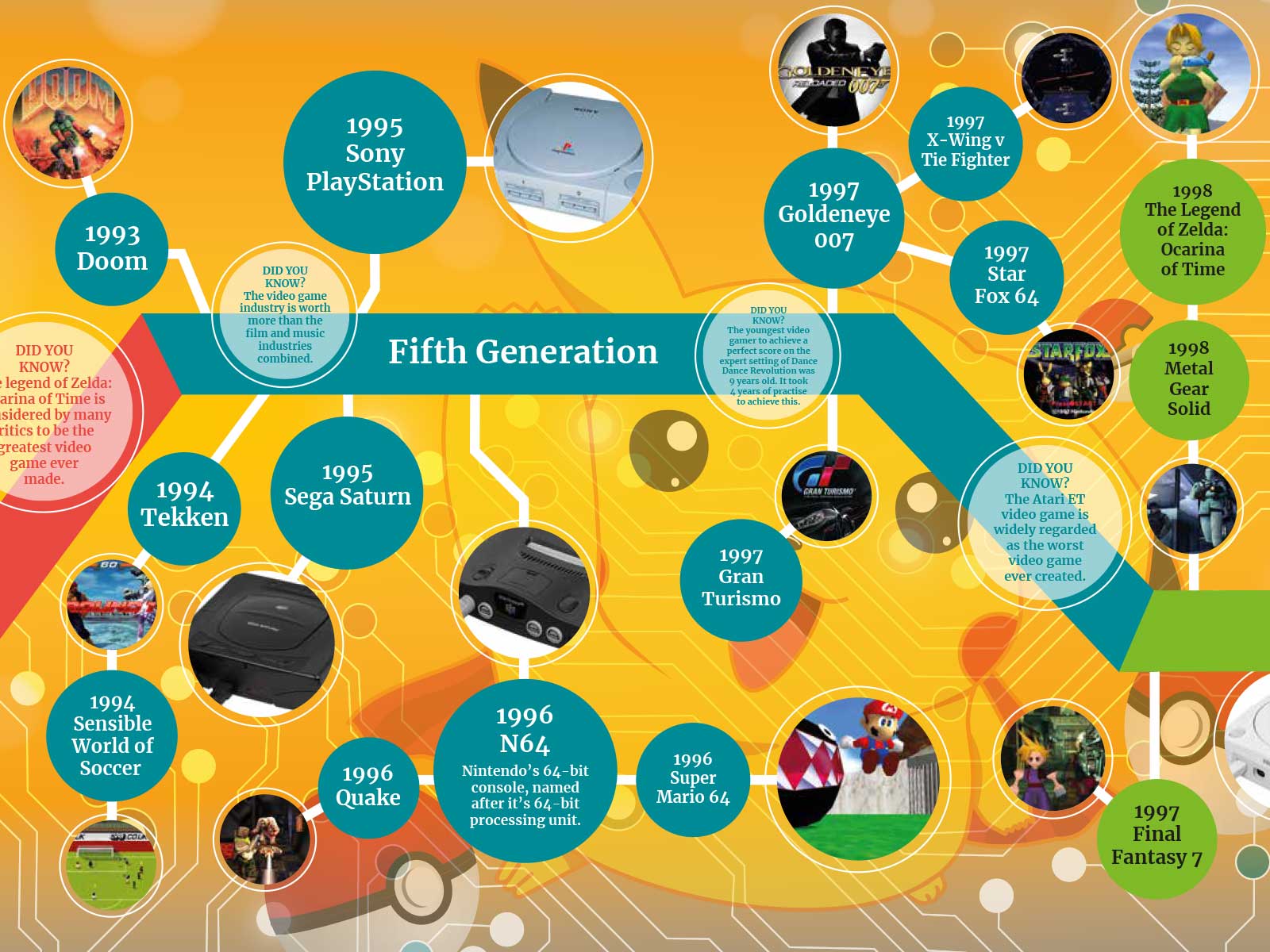
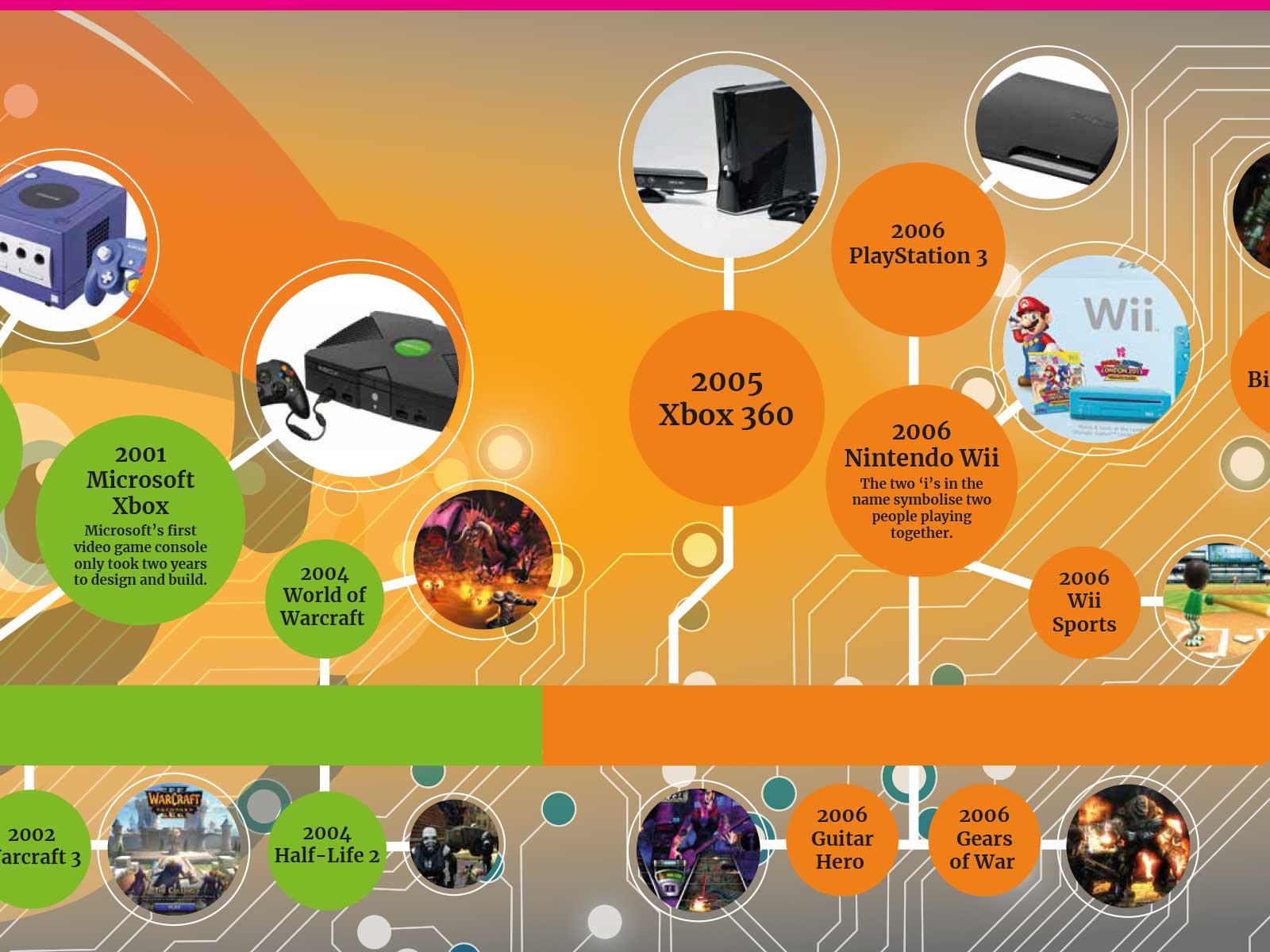
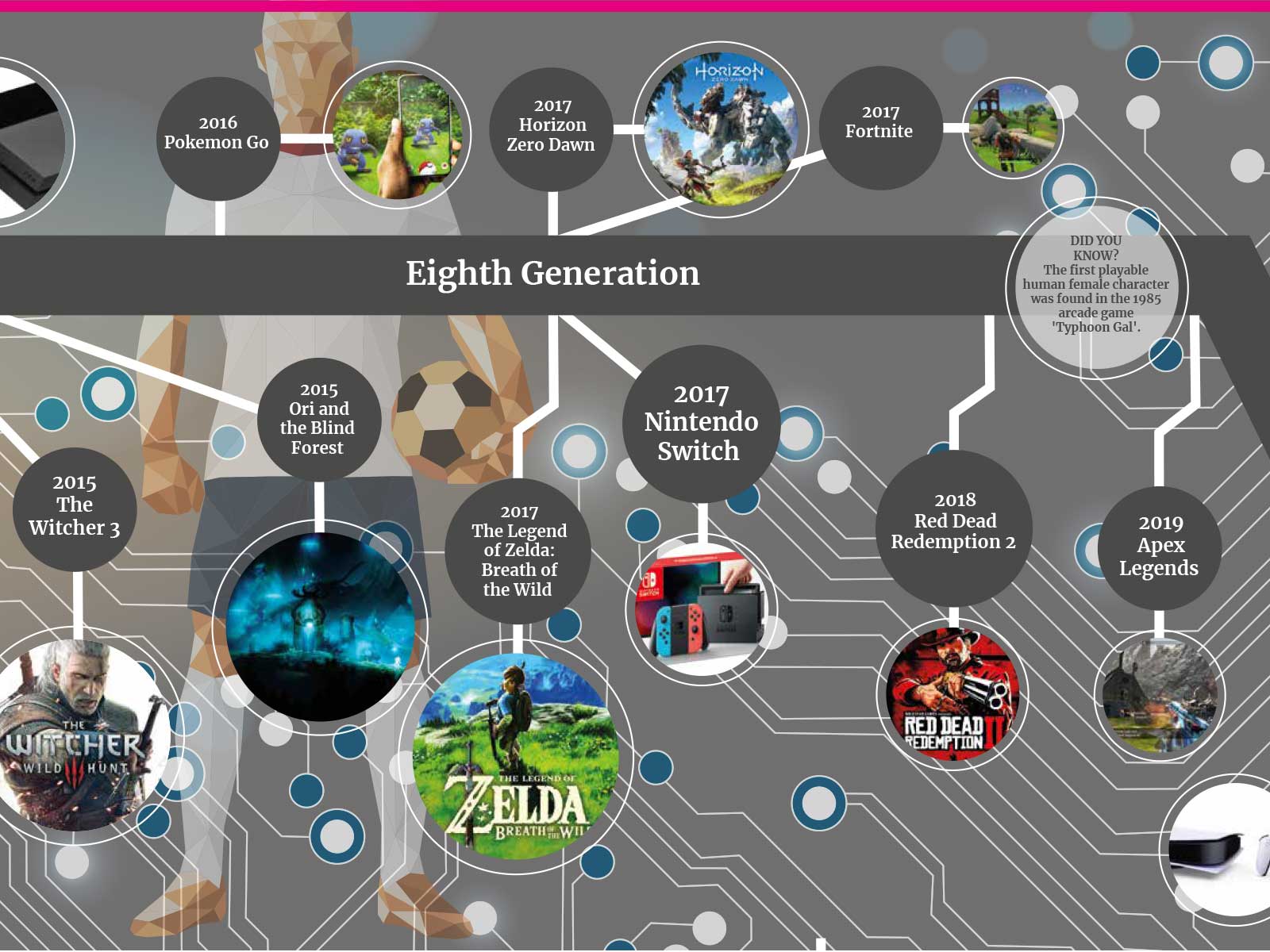
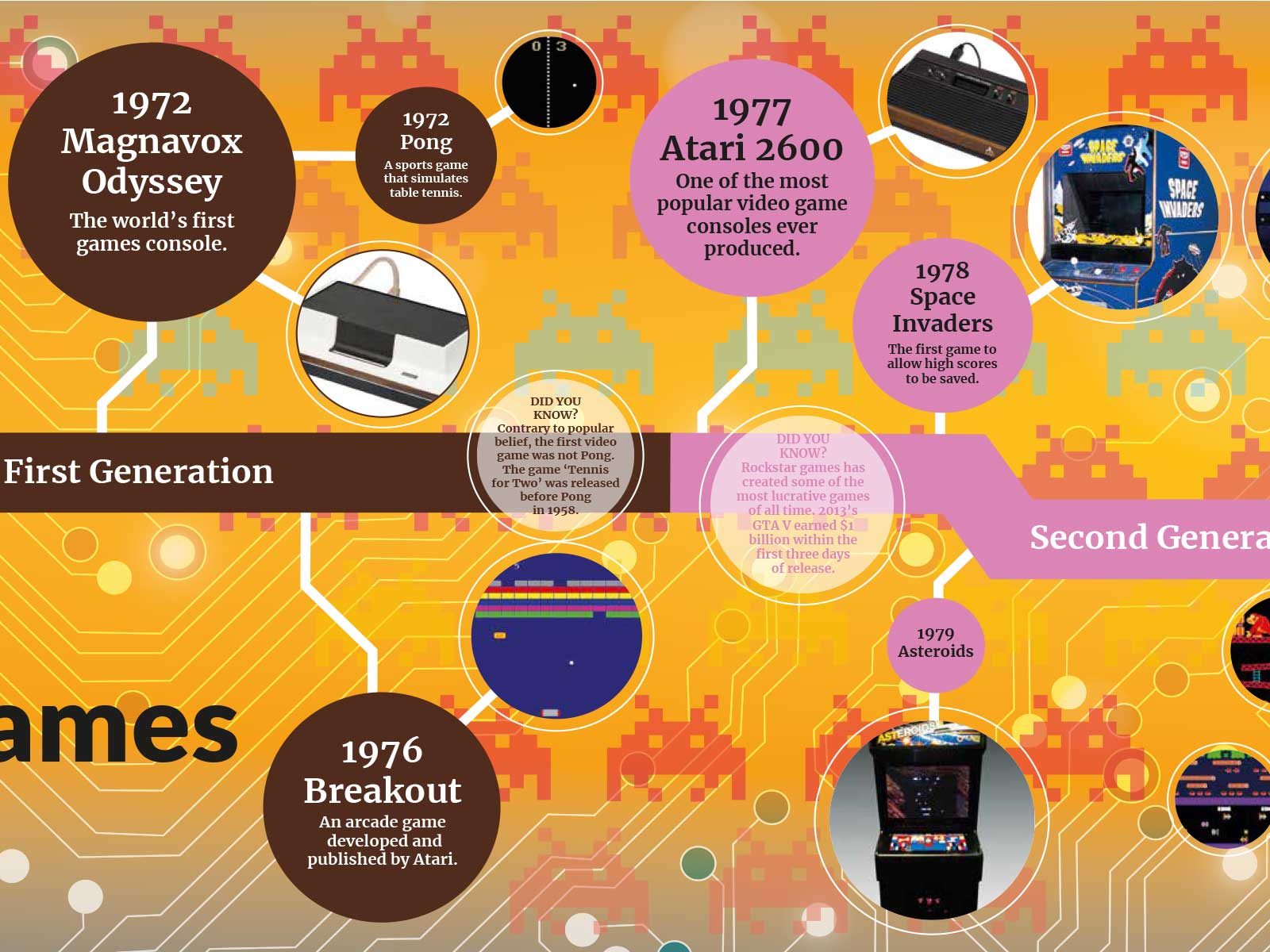
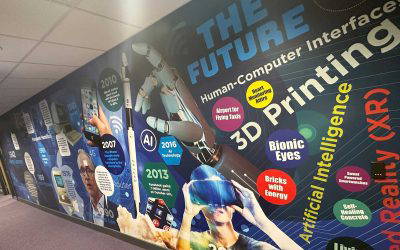
The central feature of the project became the history timeline of computer games, charting the progression of gaming technology across decades. The design incorporated recognisable consoles, influential games and major technological milestones to create a visually engaging learning resource that students could interact with daily.
Creating a Space Students Connect With
One of the most important aspects of the project was relatability. Students instantly recognise many of the games and consoles featured within the timeline, helping create an emotional connection with the displays.
This approach turns corridor displays into conversation starters. Pupils naturally engage with familiar references, while teachers can use the graphics to support classroom discussion around coding, game design, technology evolution and careers in the digital industries.
The Installation
The installation phase focused on delivering a professional finish that would withstand the demands of a busy secondary school environment.
All graphics were manufactured using high-quality, durable materials suitable for high-traffic educational settings. Surfaces were selected for longevity, easy maintenance and resistance to daily wear and tear.
Schools investing in secondary school wall art often require solutions that are both visually impactful and practical for long-term use. This project successfully achieved both objectives.
The Impact
Increased Pupil Engagement
The completed displays transformed previously plain walls into engaging educational features that students interact with every day.
The history timeline of computer games quickly became a focal point within the department, encouraging pupils to stop, read and discuss the content. Because the subject matter connects directly with students’ interests outside school, the graphics help make classroom learning feel more relevant and accessible.
Teachers also gained a visual resource that supports wider discussions around technology, innovation and creative careers.
Enhancing Presentation and Ofsted Readiness
Strong visual presentation remains an important part of how schools communicate their values, curriculum strengths and ambitions.
The finished displays support the school’s overall presentation by demonstrating investment in learning environments, curriculum engagement and student experience. The project also strengthened departmental consistency and visual cohesion across classrooms and shared spaces.
For schools considering wider secondary school branding solutions, projects like this show how educational graphics can reinforce both learning and identity simultaneously.
Why Schools Choose Design for Education
At Design for Education, we specialise exclusively in educational environments. We understand the balance schools need between visual impact, durability, safeguarding and curriculum relevance.
Our projects are designed to do more than decorate walls. We help schools create environments that:
- Inspire learners
- Reinforce school values
- Improve presentation
- Support curriculum delivery
- Strengthen school identity
- Create engaging spaces for pupils and staff
From school wall graphics and corridor displays to complete learning environment design schemes, we work collaboratively with schools to create solutions tailored to their pupils, staff and objectives.
Let’s Bring Your Vision to Life
Book a free on-site planning session. We’ll assess your school’s specific needs in person and provide a custom strategy—plus a clear, upfront quote.

More like this…
Rivington and Blackrod High School Case Study | ICT Corridor Wall Art
ICT corridor wall art transformed a Bolton secondary school, improving engagement, identity and learning environment design.
Computer Science Wall Art Case Study | Coop Academy Bebington
Discover how a large computer science wall art timeline transformed the ICT stairwell at Coop Academy Bebington into an inspiring learning space.
Bronte Girls Academy Computer Science Timeline Case Study
See how a GCSE Maths wall display transformed The Westgate School maths corridor into a purposeful, high-impact learning space.