
SEND curriculum wall art can help students with special educational needs and disabilities learn, but too much colour, text and detail on a wall can add to cognitive load. The aim is wall art that supports learning without overwhelming the students who walk past it every day.
In 2025/26, DfE statistics show 538,547 pupils in England had an EHC plan (6.0%), and 1,319,780 received SEN support (14.8%). For SENCOs, headteachers, school business managers and trusts, the question is how to make walls work for that range of needs. This guide covers design principles from DfE guidance, curriculum ideas, where to use wall art and how to brief it.
Planning wall art for a specialist school or resourced provision? Request your free site survey, and the Design for Education team will talk it through with you.
TL;DR: SEND Curriculum Wall Art
- Keep it simple: fewer, larger, clearer elements are a sensible starting point.
- Limit display space: DfE guidance (written for mainstream settings) advises limiting wall display space in learning areas and corridors, and considering how intense displays are.
- Colour and finish: the DfE suggests muted colours and matt, low-reflective finishes.
- Symbols and wayfinding: use consistent symbols, supported by pictorial systems such as Makaton, and use colour to help students find their way.
- Involve the right people: bring SEND staff, therapists and students into the brief, and keep calm areas simple.
Why Wall Art Design Matters in SEND Settings
The DfE’s Inclusive education estates guidance (June 2026) notes that clutter adds cognitive load for students, which is why it advises schools to think carefully about how much goes on their walls.
It is non-statutory and written for mainstream settings, so treat it as a source of principles, not a specification for a specialist school. Every student group and every school is different.
The Neuroinclusive Education Network’s Autism Design Principles for Schools, introduced by Dr Sarah Broadhurst of the Autism Education Trust, make a broader point: “the environment is a fundamental part of creating a positive education for autistic children and young people”.
Wall art cannot treat or change a student’s needs. What it can do is avoid adding to their sensory load while still supporting learning.
Principles for SEND Curriculum Wall Art
Keep It Simple and Limit What Is on the Wall
The DfE advises limiting wall display space in learning areas and corridors, and considering how intense displays are. In practice, we suggest one clear idea per wall, large type and plenty of space around it.
Choose Muted Colours and Matt Finishes
The DfE suggests matt, low-reflective finishes in muted colours, and calming nature-inspired colours, with nature imagery used sparingly. Sensory needs differ, so ask your SENCO to review colour choices before design begins.
Use Consistent Symbols
The DfE suggests consistent symbols across the setting, supported by pictorial systems such as Makaton. Using the same symbol for the same idea on every wall keeps the message predictable.
Use Colour for Wayfinding and Zones
The DfE suggests colour as a wayfinding cue, and gradual changes in colour, flooring or lighting to mark transitions between quiet, active and social areas. Colour-coded corridors and simple markers can do that job on a wall.
Make Layouts Predictable
Put the same kind of information in the same place. Keeping a timeline running in one direction, in one visual style, can help students know how to read each new wall.
Leave Some Walls Quiet
The DfE describes calm, predictable, low-stimulus spaces close to teaching areas. Where those spaces exist, keep their walls simple, and use wall art in the busier areas around them.
Want to talk these principles through for your own corridors? Speak to our team.

Curriculum Wall Art Ideas for SEND Schools
Curriculum content can work in SEND settings when it is edited for clarity. Ideas to discuss with your staff:
- SEND timeline wall art with fewer dates, larger images and symbol support. See our timeline wall art.
- Maps and geography walls with clear labels. See our geography wall art.
- Subject walls, such as science wall art, maths wall art and English wall art, that focus on one concept at a time.
- Vision and values walls and welcome walls in clear language with symbols.
- Bring a touch of nature, like a forest, meadow or underwater scene to create a calming environment.
Where to Use Wall Art in a SEND School
- Entrances and welcome walls: set the tone and show your school’s identity.
- Corridors: use colour and symbols for wayfinding. The DfE notes that calming artwork or nature images can break up long corridors.
- Stairwells: a continuous band can carry a clear, simple message.
- Classrooms: one clear feature wall rather than several.
- Calm areas: keep them minimal.
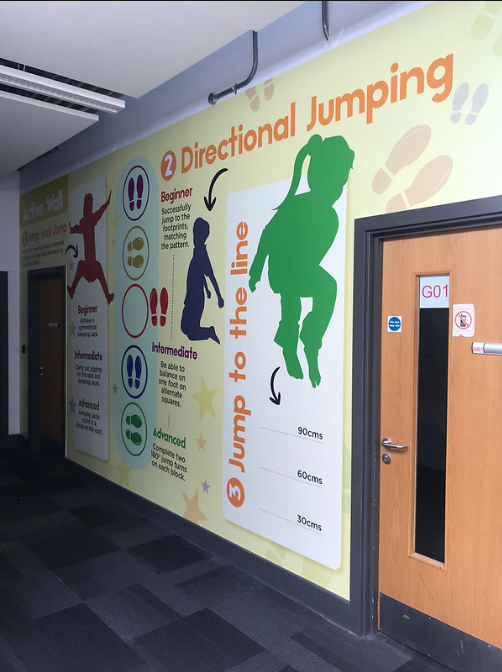
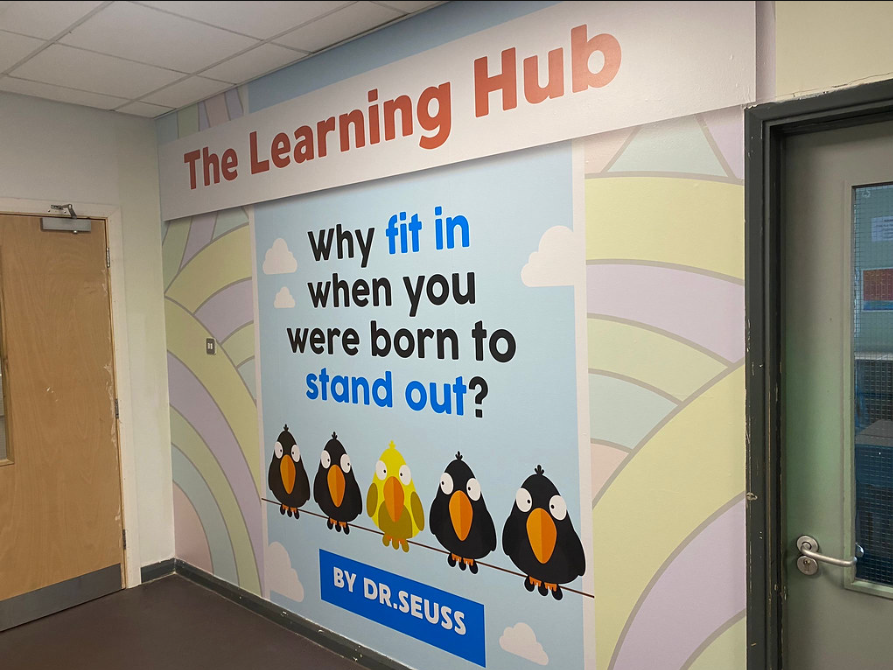
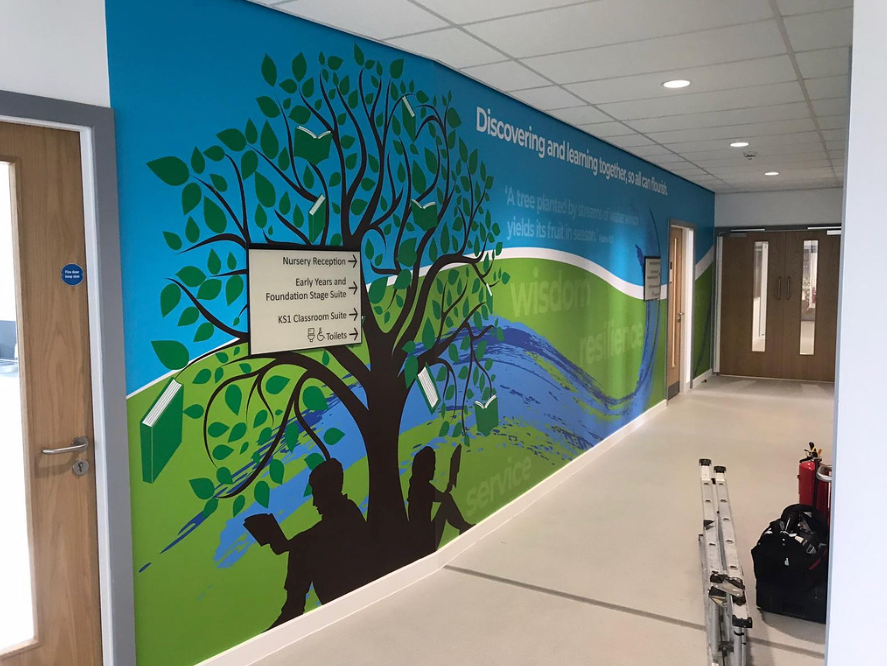
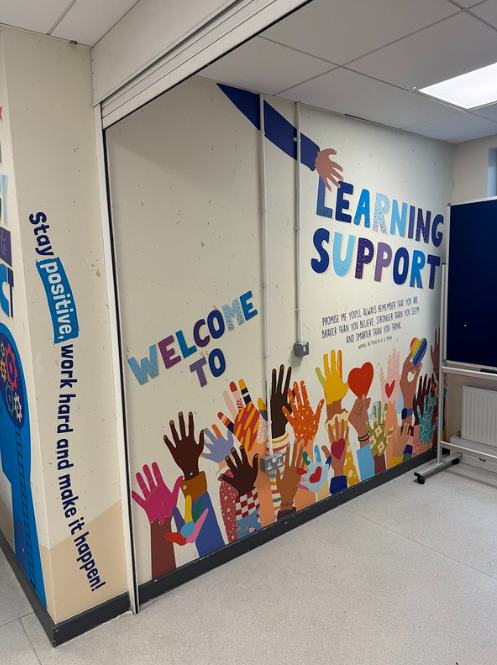
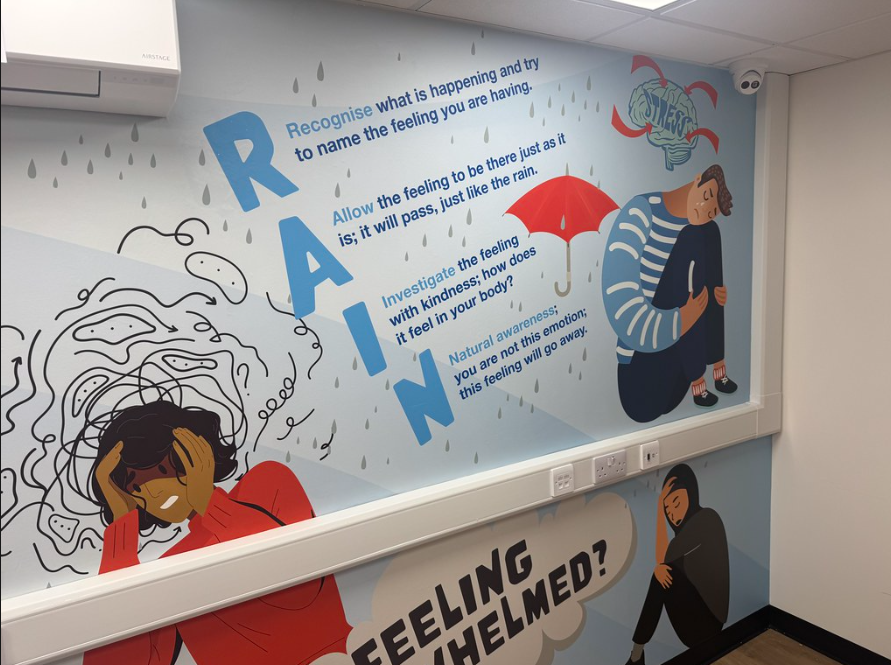
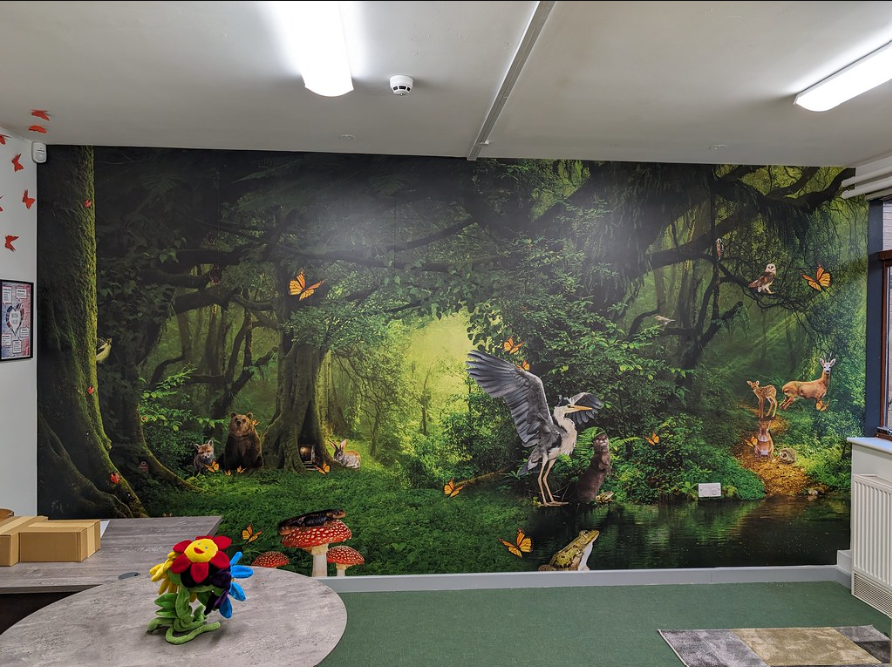
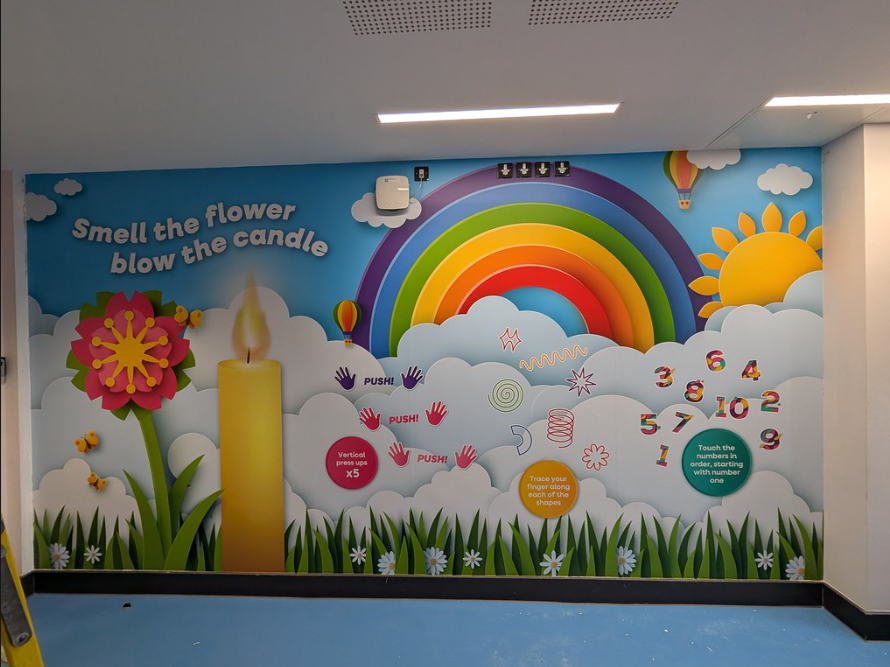
Real Examples From Design for Education
Fairfield School Transformation
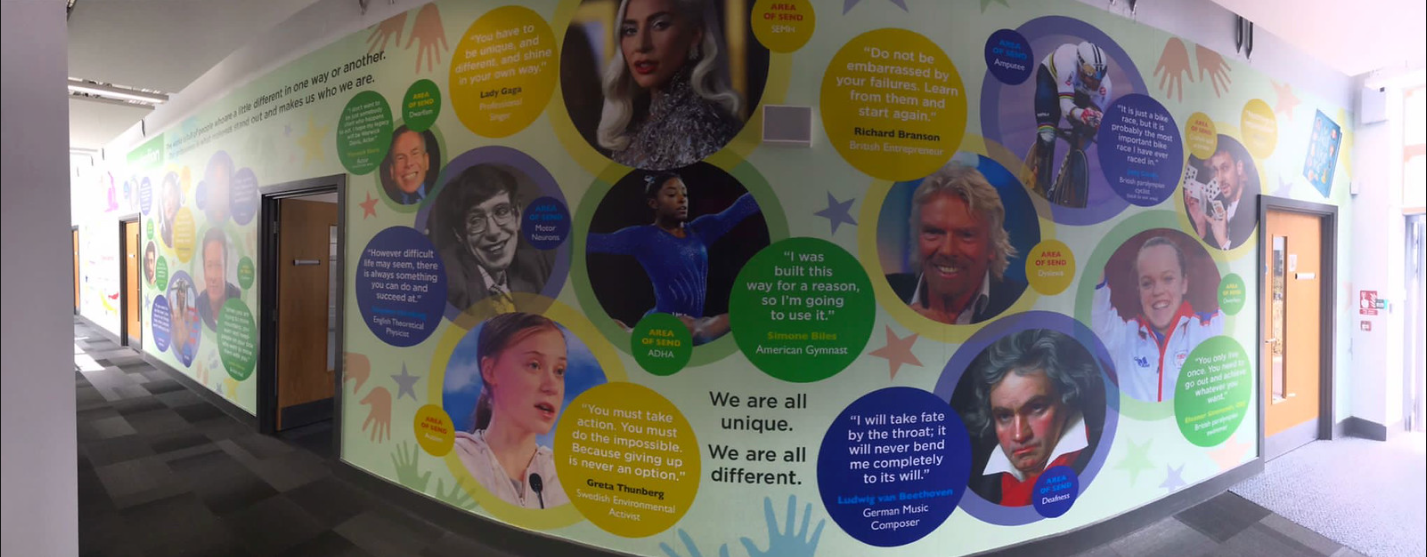
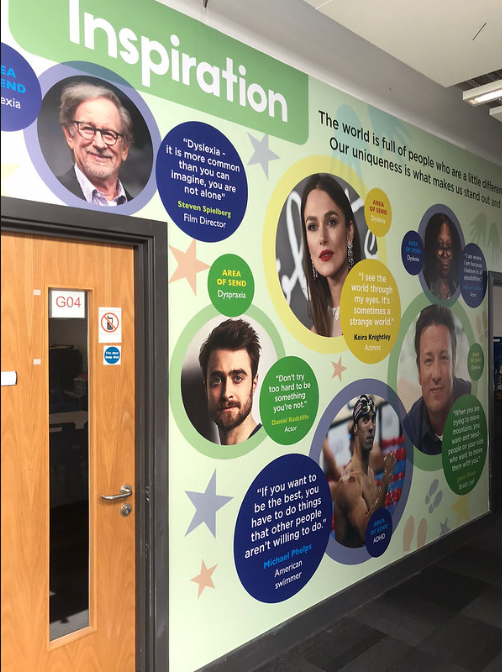
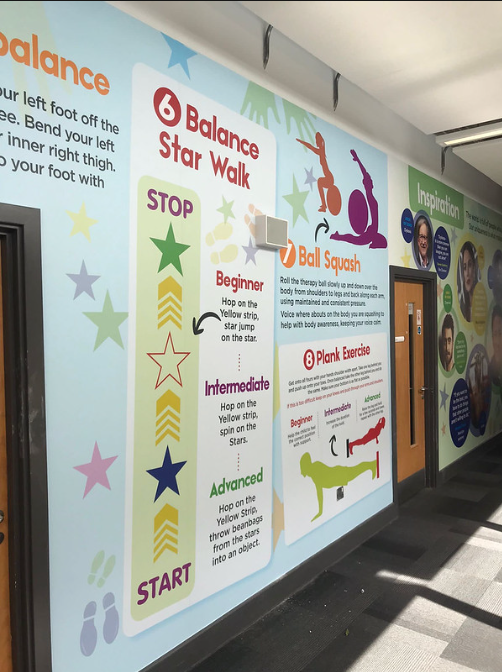
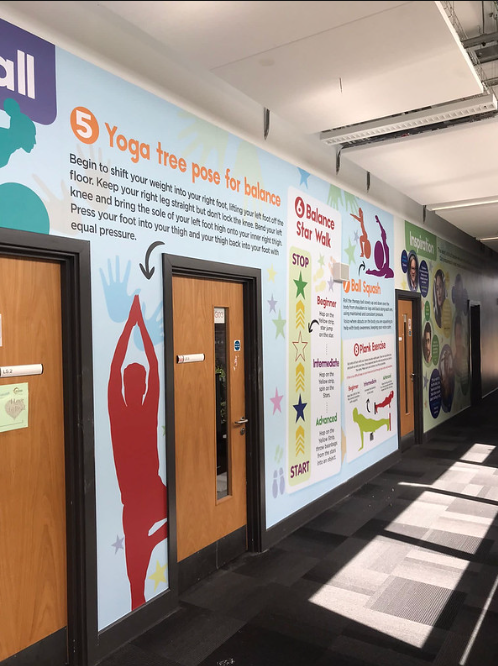
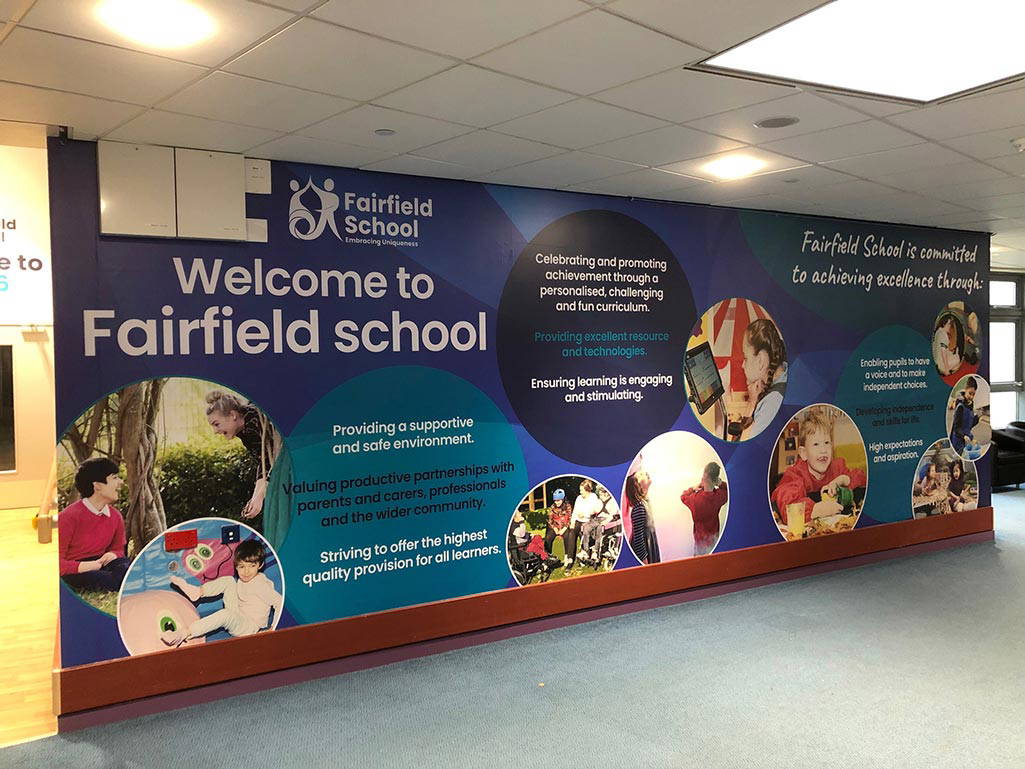
Fairfield School in Batley is a specialist school for students aged 4 to 19 with complex needs. We created a new brandmark and brand guidelines, signage, new wall displays and a welcome wall that presents the school’s vision and values. The school’s motto is “embracing uniqueness”.


Barnsley Academy Reflections Space
At Barnsley Academy, we created bespoke British Values wall art for the Reflections department, using muted colours, clear zoning and durable, easy-clean graphics. Staff said it feels more welcoming.


Questions to Ask Before Design Starts
A short conversation with your SEND team saves rework later. Useful questions include:
- Which colours and symbols already work across your school?
- Which areas are busy, noisy or calm, and which walls should stay quiet?
- Which students should see the design before it is printed?
- Who will review the final design, and by when?
How to Brief SEND Wall Art
- Involve the right people: your SENCO, therapists, class teams and, where possible, students.
- Walk the space first, noting busy, noisy and calm areas.
- Agree priorities: wayfinding, curriculum, identity or calm.
- Ask about finishes and materials, including wipe-clean, Class 0 fire-rated materials. Our guide to making school wall art last explains how they should be cared for.
- Review the design before print: our free site survey and unlimited design amends give your SENCO time to comment.
- Plan installation around the school day: our DBS-checked installers can work in the evenings, weekends and holidays.
See our school wall art page for more on materials, our guarantee and installation, and our guide to how much school wall art costs, with starting prices by wall art area.
From Survey to Installation
At Design for Education, our process starts with a free site survey, followed by bespoke design with unlimited design amends. Typical timelines are 4 to 8 weeks, and DBS-checked installers can work in the evenings, weekends and holidays. We do not ask for a deposit. We invoice after installation, once you are satisfied, on 30-day terms.
Talk to Us About Your School
We design, print and install bespoke wall art for schools, from the free site survey through to installation, and every installation has a 5-year guarantee. See our wall art case studies for recent projects, then request your free site survey, and we’ll talk through your school.
SEND Wall Art: FAQs
What Is SEND Wall Art?
SEND wall art is wall art designed with the needs of students with special educational needs and disabilities in mind. It is usually calmer, clearer and more predictable than standard displays, with simple layouts, consistent symbols and muted colours, and it is planned with SEND staff to maximise impact.
Is Bright, Colourful Wall Art Bad for Students With SEND?
Not always. DfE guidance, written for mainstream settings, advises muted colours and limiting how intense displays are, but sensory needs differ between students. Ask your SENCO and class teams to review colour choices, particularly in learning areas and corridors, before design begins.
Can Wall Art Help With Wayfinding?
Yes. The DfE suggests colour as a wayfinding cue and gradual changes in colour to mark transitions between quiet, active and social areas. On a wall, this can mean colour-coded corridors and consistent symbols that show students where they are and where they are going.
Who Should Be Involved in Briefing SEND Wall Art?
Your SENCO, therapists and class teams, and, where possible, students themselves. They know which areas are busy, noisy or calm, and which colours and symbols work for your students. Involve them before design starts, and use our free site survey and unlimited design amends to get the detail right.
How Much Does SEND Wall Art Cost?
Pricing depends on the area and the design. At Design for Education, our from prices run from £995 + VAT for reception areas to £2,495 + VAT for school hall feature walls, and every project is quoted after a free site survey. Our cost guide sets out starting prices by area.
More like this…

How to Make School Wall Art Last: Materials, Care and When to Refresh
Good care, regular checks and the right material for each wall help school wall art keep looking its best. Every Design for Education installation has a 5-year guarantee, and the material lasts 5+ years. How long it looks its best in practice depends on the wall, how...
How Much Does School Wall Art Cost?
School wall art costs from £995 + VAT for a reception wall and from £2,495 + VAT for a school hall feature wall. How much your wall art project will cost depends on the walls, the design and the installation. If you are a school business manager, headteacher or trust...
How Bespoke World Maps Can Transform Geography Corridors
Schools are increasingly rethinking how they view corridors - repositioning them as active learning spaces, rather than sterile walkways. Bespoke world maps can transform bare corridors into a dynamic learning environment that reinforces the geography curriculum....

Create a Lasting Reading Culture Beyond World Book Day With Library Wall Art
With World Book Day fast approaching, schools across the UK are preparing to celebrate books, authors and the joy of reading. But while the costumes and book tokens generate excitement, building a sustainable reading culture requires more than a one-day event....
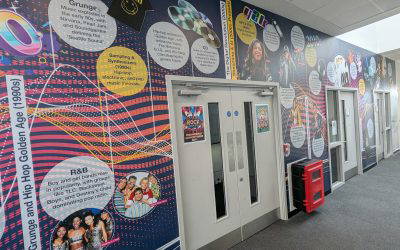
School Wall Art Trends for 2026
From nurseries to colleges, engaging, colourful and informative wall displays and art installations can transform any space into the perfect setting for learning. As we move into 2026, there are a number of trends due to be big-hitters when it comes to school wall...
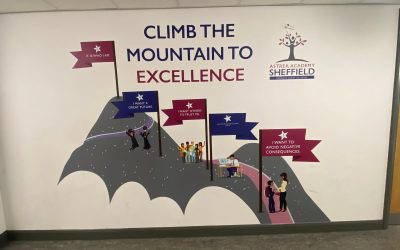
How School Wall Art Supports Ofsted’s New Inspection Priorities
Ofsted has recently updated the Education Inspection Framework, moving away from the previous Intent → Implementation → Impact model. Under the 2025 Education Inspection Framework (EIF), schools are evaluated across six clearly defined areas: Curriculum &...
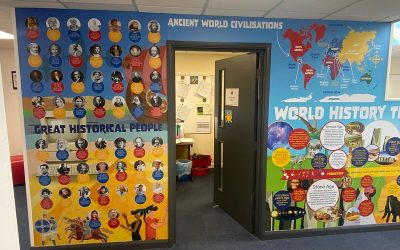
Maximise Educational Impact Through Creative School Wall Murals
Creating School Wall Art That Inspires and Transforms The design of your school’s learning environment plays a crucial role in engagement, motivation, and academic success of your students. Get it right, and you’ll develop a visually stimulating surrounding that...
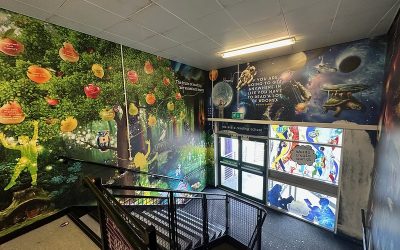
School Wall Displays: Engaging Students Beyond the Classroom
Unlock the Hidden Power of Your Educational Environment School wall displays are a powerful yet often underutilised tool in education. The power of well-designed, vibrant school wall murals goes far beyond improving the aesthetics of a school. They become an extension...